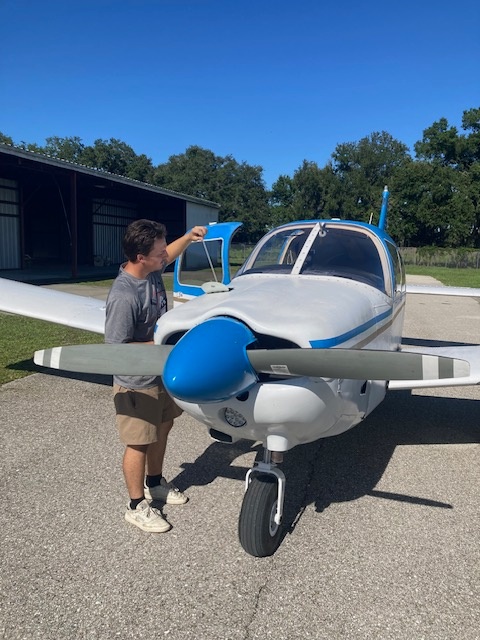
After four months of being grounded for inspection and repairs, our Piper Archer training aircraft is again reaching for the skies. It was getting a little discouraging to watch other airplanes take off and land while we were stuck in the hangar, but there is always a reason. We trust that God knows best! No one was more excited than me, as this meant that I could resume flight instruction for our missionary student pilot apprentice, Matt Brimson as well as commercial pilot candidate Chad Peal. We immediately began our flight lessons and have already completed seven training flights and several ground lessons in the last three weeks. The airplane is flying and running well. Now we are dealing with unusual afternoon weather conditions in Florida as hurricane season is approaching and I have had to cancel a few flights. Consequently, since Matt has been helping in the hanger the last year, he understands the airplane so much better than he ever had before. Missionary pilots often earn their A&P mechanic’s certificate so they are more versatile on the field. Since Matt has been helping with aircraft maintenance, he has been logging that time in case he chooses to go that route as well. Chad has already earned his A&P certificate through the Harvest Apprenticeship Program.
To give you an understanding of what future missions pilots go through, here is a basic layout of the stages in their training.
- Private pilot: Matt will have around 60 hours piloting the plane, much of it with me or another instructor, but a portion solo, meaning he will be alone in the plane. Once training is complete and he passes his checkride, the private pilot certificate will allow him to carry passengers and fly day and night in good weather (VFR) conditions. He may not be paid for flying.
- Instrument Rating: This requires another 40 hours of flight training. An instrument rating is an addition to the private pilot certificate, allowing a pilot to fly in the clouds relying only on his instruments.
- Commercial: Chad will qualify to take the commercial flight test after he has additional flight and ground instruction. Chad has aleady accumulated more than the minimum flight experience of 250 hours, but his training will involve precise flying with stricter standards and more difficult flight maneuvers. His knowledge base will increase, with more emphasis on weather and rules governing commercial aviation. With a commercial rating and more experience, our candidates will be eligible to fly with mission aviation organizations.